+86 188-1951-9629
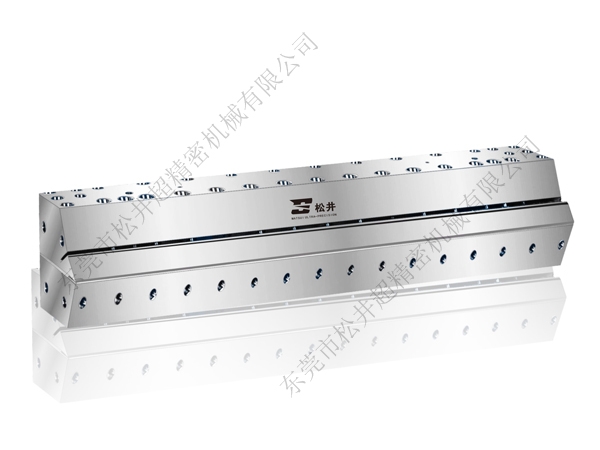
The slot-die extrusion coating die is a tool used to apply liquid coatings onto target substrates and is widely employed in products requiring precise coating, such as LCD panels, high-performance functional films, and lithium-ion secondary batteries. Structurally, the slot-die consists of a matched pair of “stainless steel main bodies” and “cemented carbide lips” that form the coating slit. Coating fluid is fed from a manifold (reservoir chamber) within the die body and extruded through the cemented carbide lips, enabling uniform deposition onto the substrate. Compared with conventional coating methods like spraying, slot-die coating prevents evaporation or splattering of the coating fluid into the surrounding environment, making it widely recognized as a clean and efficient process.
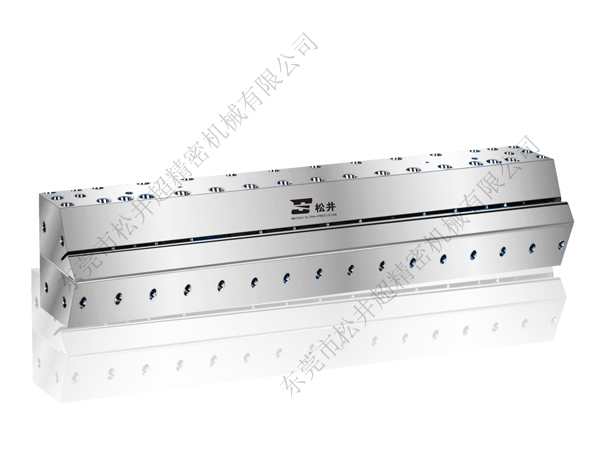
Slot-die extrusion coating is an advanced pre-metered coating technology capable of producing highly precise coatings. Currently, the lithium-ion power battery industry has widely adopted this technique for manufacturing battery electrodes. In slot-die extrusion coating, a slurry with a controlled flow rate enters the die cavity through the inlet of the die head, builds up stable pressure inside, and is then uniformly extruded through the narrow slit at the die exit onto a metal foil substrate.
The slot-die extrusion coating die is a critical component in lithium battery electrode production, directly determining the quality and uniformity of the coated electrode. Consequently, the die typically accounts for more than 30% of the total cost of the entire coater. The die structure primarily comprises three parts: the upper die, the lower die, and shims. The lower die features a specially designed internal cavity, while the upper die has a relatively simpler structure. Shims, positioned between the upper and lower dies, can be selected based on different coating requirements. Key factors affecting coating thickness uniformity include the uniformity of the exit velocity from the die cavity, substrate flatness, slurry homogeneity, and surface tension—among which the uniformity of the die exit velocity is one of the most critical. The geometric design of the die cavity directly influences the internal flow field; optimizing structural parameters effectively enhances the uniformity of the exit velocity distribution. Today, numerous domestic companies have independently developed and designed coating dies, with key optimization strategies including:
(1) Internal flow channel design—such as tapered, coat-hanger, single-cavity, and dual-cavity manifold structures—aimed at maintaining consistent slurry flow velocity within the die, avoiding stagnant zones or particle settling, thereby ensuring uniform exit velocity at the die slit and consistent coating thickness.
(2) Optimization of inlet location—for example, bottom-fed or side-fed configurations—to modify fluid dynamics and ensure uniform exit velocity across the die slit.