+86 188-1951-9629
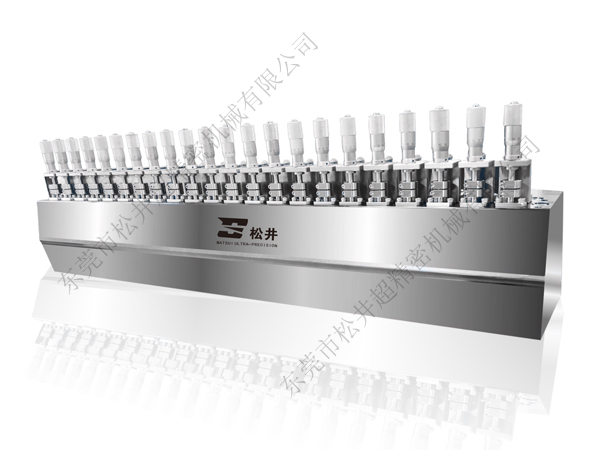
It enables fine adjustment of the transverse coating thickness profile for improved uniformity. When using a slot-die coating die, adjusting the die lips can eliminate visible coating streaks caused by locally excessive thickness and correct or eliminate the common “center-thick, edge-thin” phenomenon that occurs during high-viscosity coating applications. This approach breaks through the upper viscosity limit of coating fluids and maintains coating precision within extremely tight tolerances, thereby reducing raw material costs.
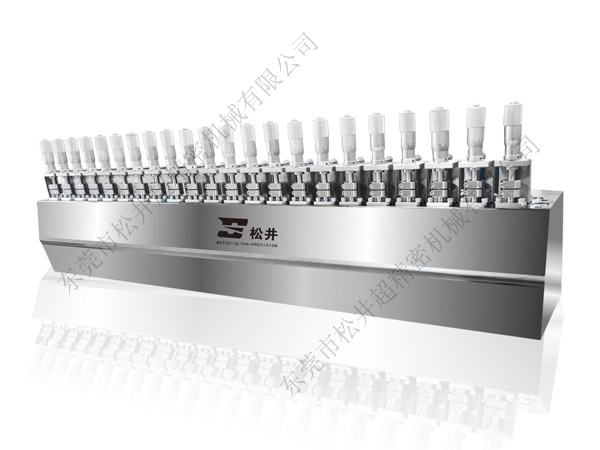
This adjustability is achieved because the adjustable die lip system consists of multiple independently controlled segments aligned across the die width. The coating die is equipped with a thickness adjustment system, and these lip adjustment units are typically manually operated. As an optional upgrade, the die can be integrated with an automatic thickness control system for closed-loop operation. This system employs thermally expandable adjustment blocks that respond to feedback from a downstream coating weight scanner. When the scanner detects areas where coating thickness exceeds the target, the power to the corresponding embedded heating rods at those die lip locations is increased. This causes localized thermal expansion of the adjustment block, narrowing the die gap in that region. Conversely, areas with insufficient thickness are corrected by reducing the heating power.
Considering specific operating environments and cost factors, the material selection for the extrusion die should be made rationally based on application requirements, and different material combinations may be considered.
Cemented carbide is a powder metallurgy product primarily composed of hard phases and a binder phase. In slot-die coating applications, the hard phase—mainly various carbides such as tungsten carbide (WC), titanium carbide, tantalum carbide, and niobium carbide—is extremely hard, with cobalt commonly used as the binder. TF15, a tungsten steel cemented carbide from Japan, features ultra-fine grain size (<1 μm), offering an excellent balance of hardness and toughness. It allows for sharp cutting edges with high tip strength and superior baseline mechanical properties. Compared to stainless steel edges, dies with ultra-hard alloy edges deliver significantly better coating thickness uniformity. Using wear-resistant cemented carbide for the die lips enables long service life and high-quality coating performance.